L o a d i n g

04th and 05th June 2026

Madurai, Tamil Nadu, India

International Conference on Environment, Agriculture, Horticulture & Life Sciences (ICEAHLS)

“Science, Innovation and Sustainability for a Better Planet”

Organized by : International Association for Innovation and Scientific Research (IAISR)

Venue: Agricultural College & Research Institute (AC & RI), Tamil Nadu Agricultural university(TNAU) Madurai, Tamil Nadu, India

Abstract submission Register now

Contact Form

Academic Partners

Promotional Partners

About ICEAHLS

The International Conference on Environment, Agriculture, Horticulture & Life Sciences (ICEAHLS), organized by the International Association for Innovation and Scientific Research (IAISR), will be held on 04th and 05th June 2026 at AC & RI, Madurai, Tamil Nadu, India under the theme “Science, Innovation and Sustainability for a Better Planet.”

The conference is being organized in association with the Faculty of Built Environment,& Surveying, Universiti Teknologi Malaysia (UTM), Malaysia, Agricultural College & Research Institute (AC & RI), Madurai, and the Horticultural College & Research Institute (HC & RI), Periyakulam, both constituent colleges of the Tamil Nadu Agricultural University (TNAU), along with the International Association for Innovation and Scientific Research (IAISR)

The International Conference on Environment, Agriculture, Horticulture & Life Sciences (ICEAHLS) aims to foster the dynamic exchange of knowledge, experience, and innovative ideas among researchers, academicians, industry professionals, and policymakers across a broad range of disciplines organized by International Association for Innovation and Scientific Research (IAISR) on 04th and 05th June 2026 at Agricultural College & Research Institute (AC & RI), TNAU Madurai, Tamil Nadu, India will serves as a global platform for researchers, practitioners, and policymakers to connect, exchange ideas, and shape a future where science, innovation, and environmental stewardship go hand in hand for the benefit of people and the planet.

Important Dates

Early Bird Registration

Deadline : 20th April 2026

Abstract
Submission

Deadline : 25th April 2026

Standard
Registration

Deadline : 30th April 2026

Final
Registration

Deadline : 05th May 2026

Downloads

Brochure

Our Speakers

We are proud to feature a diverse lineup of esteemed speakers, including industry leaders, renowned researchers, and academic pioneers who bring valuable insights and expertise to every session. Their contributions inspire innovation, foster collaboration, and shape the future of research and development

D. Suresh Kumar

Director, CARDS, TNAU, Coimbatore, Tamil Nadu, India

Muhammad Najib Razali

Director (Real Estate Economics and Finance) Universiti Teknologi, Malaysia

Dr. Damodaran Thukkaram

Director, ICAR Central Institute for Subtropical Horticulture India, Lucknow, Uttar Pradesh, India

Dr. Ravindran Chandran

Associate Professor and Head Horticultural Research Station, TNAU, Kodaikanal Tamil Nadu, India

Dr. Ayad Mohammed Jebur Al-Mamoori

Professor, Department of Biology/Environmental Biotechnology, University of Babylon, Iraq.

Dr.K.G.Sabarinathan

Associate Professor and Head Department of Agricultural Microbiology AC & RI, Madurai, Tamil Nadu, India

Dr. Iman Farshch

Dean, Faculty of Engineering, Built Environment & Information Technology, MAHSA University, Malaysia

Dr. Vikas Tandon

Dean, Faculty of Horticulture & Forestry, SKUAST-Jammu, India

Dr. Mohammed Aurifullah

Senior Lecturer, Faculty of Agro Based Industry, Universiti Malaysia Kelantan, Malaysia.

Ir. Dr.-Ing. NoorAshrina Binti A. Hamid

Senior Lecturer, School of Chemical Engineering, Universiti Sains Malaysia, Malaysia

N. Manikanda Boopathi

Department of Plant Biotechnology Centre for Plant Molecular Biology and Biotechnology Tamil Nadu Agricultural University Coimbatore, Tamil Nadu, India

Jefferson Kevin A. Lerio

Founding President, Philippine Institute of Geographic Information System Specialists, Inc, Philippines

Dr. Nagaraaj Paramathevar

Assistant Professor (Sr. Gr.), Department of Chemistry, Anna University, CEG Campus, Chennai, Tamil Nadu, India

Dr. Sandeep Singh

Principal Entomologist (Fruits), Department of Fruit Science, PUNJAB AGRICULTURAL UNIVERSITY, India

HARYATI SHAFII

Assoc Prof | Phd, Lecturer Of Environmental Management, Department Of Construction Management, Faculty Of Technology Management And Business, Universiti Tun Hussein Onn Malaysia.

Dr. J Dinkara Adiga

Director, ICAR-Directorate of Cashew Research, Puttur, Karnataka, India.

Dr. Veeranan Arun Giridhari

Associate Professor, Centre for Post Harvest Technology , TNAU, Coimbatore, Tamil Nadu, India

Dr. Mohamad Darwish

Senior Lecturer, Faculty of Civil Engineering, Universiti Teknologi Malaysia (UTM), Malaysia

Dr. Vikas Sharma

Chief Scientist & Head, Regional Agricultural Research Station, SKUAST-Jammu, India

Dr. S. Manivannan

Dean, Department of Horticulture, Central University of Tamil Nadu, Thiruvarur, Tamil Nadu, India

V. Sundaresan

Senior Principal Scientist, CSIR-Central Institute of Medicinal and Aromatic Plants (CSIR-CIMAP), Research Center, Bengaluru. India

Our Committee Members

We are proud to be guided by a distinguished committee comprising visionary leaders, accomplished researchers, and respected academics. Their expertise, dedication, and strategic insights drive the mission of IAISR forward. Our committee members play a vital role in promoting innovation, ensuring academic excellence, and fostering global collaborations that shape the future of research, sustainability, and development

Dr. S. Saraswathy
Dr. S. Saraswathy

Dean, Horticultural College and Research Institute, TNAU, Periyakulam, INDIA

Dr. Nader Ghaffari Khaligh

Associate Professor, Nanotechnology and Catalysis Research Centre, University Malaya, Malaysia.

Dr. Md. Taibur Rahman

Senior Assistant Director, Bangladesh Agricultural Research Council, Ministry of Agriculture, Bangladesh

Dr. S. Kanchana
Dr. S. Kanchana

Dean, Community Science College and Research Institute TNAU, Madurai, Tamil Nadu, India

Dr.P.Chandramani
Dr.P.Chandramani

DEAN Department of Entomology Agricultural College & Research Institute, TNAU, INDIA

Dr. Tuty Haryati Jasimin

Senior Lecturer at University of Technology, Malaysia

⁠Dr. Ezdihar Hamzah
⁠Dr. Ezdihar Hamzah

Senior Lecturer, Built Environment and Surveying, University of Technology, Malaysia.

Dr. C. Rajamamickam
Dr. C. Rajamamickam

Professor and Head Department of Horticulture Agricultural college and Research Institute, TNAU, Madurai, INDIA

⁠Prof. Dr. Azlina Md. Yassin

ASSOCIATE PROFESSOR, Faculty of Technology and Business Management, University of Technology, Malaysia

Dr. Fitriyah Razali
Dr. Fitriyah Razali

Senior Lecturer, Waste Management Environmental Studies Sustainable Development, University of Technology, Malaysia.

PALSAN SANNASI BIN ABDULLAH

Product Development/Agro Product Technology Faculty of Agro-Based Industry Universiti Malaysia Kelantan (UMK), Malaysia.

Hadi Erfani
Hadi Erfani

Researcher, Department of Chemical Engineering, Islamic Azad University, Iran.

Dr. K. T. Parthiban
Dr. K. T. Parthiban

Professor (Forestry) and Formerly Dean, Forest College and Research Institute, Tamil Nadu Agricultural University, India

Dr. M RAJKUMAR
Dr. M RAJKUMAR

Professor and Head, Department of Environmental Sciences, Bharathiar University, India

Prof. Dr. CEng. Isam Mohammed Abdel-Magid Ahmed

Professor of water resources and environmental engineering, Dean College of Graduate Studies & Scientific Research, Elrazi University, Khartoum, Sudan

Dr.Muhammad Yusaimi bin Abdul Hamid

Department of Real Estate, Faculty of Built Environment and Surveying, Universiti Teknologi Malaysia

Sustainable Development Goals (SDGs) Addressed by ICEAHLS

The International Conference on Environment, Agriculture, Horticulture & Life Sciences (ICEAHLS) strongly supports the United Nations Sustainable Development Goals (SDGs), particularly those addressing Zero Hunger, Good Health and Well-Being, Clean Water and Sanitation, Climate Action, Responsible Production and Consumption, and Life on Land. Through scientific dialogue and innovation, ICEAHLS contributes to advancing sustainable solutions for a healthier, greener, and more resilient planet.

SDG 2

SDG 2 – Zero Hunger

Promote sustainable agriculture, crop diversification, and food security.
Improve agricultural productivity and ensure access to nutritious food.
Encourage innovation in crop improvement, soil health, and agritech.

SDG 3

SDG 3 – Good Health and Well-Being

Advance life science research for public and animal health.
Promote nutrition, food safety, and disease prevention.
Foster One Health approaches integrating human, animal, and ecosystem health.

SDG 6

SDG 6 – Clean Water and Sanitation

Focus on wastewater treatment, water conservation, and sustainable water management.
Address pollution control and sanitation innovations in rural and urban sectors.

SDG 7

SDG 7 – Affordable and Clean Energy

Promote renewable energy technologies for sustainable agriculture and industry.
Support bioenergy, waste-to-energy, and circular economy initiatives.

SDG 9

SDG 9 – Industry, Innovation, and Infrastructure

Encourage research, innovation, and technology transfer in agriculture, biotechnology, and life sciences.
Support agri-tech startups, precision farming tools, and sustainable infrastructure.

SDG 12

SDG 12 – Responsible Consumption and Production

Emphasize waste reduction, recycling, and sustainable resource use.
Support circular bioeconomy and value-added processing in agri-horti sectors.

SDG 13

SDG 13 – Climate Action

Promote climate-smart agriculture and sustainable land use.
Encourage adaptation and mitigation research addressing climate impacts on ecosystems.

SDG 14

SDG 14 – Life Below Water

Explore sustainable aquaculture and marine biotechnology.
Address water ecosystem protection and pollution prevention.

SDG 15

SDG 15 – Life on Land

Promote biodiversity conservation, reforestation, and sustainable use of terrestrial ecosystems.
Support ecological restoration and wildlife protection through science-based policies.

SDG 17

SDG 17 – Partnerships for the Goals

Strengthen global and institutional collaboration in research, innovation, and sustainable development.
Build partnerships between academia, industry, and policymakers for knowledge exchange.

Sessions and Tracks

Uniting the World for a Sustainable Future," is not just a call to action—it’s a collective promise to rise above boundaries and shape a world where people and the planet thrive together and hence we support SDG goals

Explore strategies and innovations driving progress toward climate neutrality and resilient communities
Tracks (topics include but are not limited to)
  • Sustainable Agriculture and Climate Resilience
  • Agroecology and Organic Farming
  • Precision and Digital Agriculture
  • Soil Science and Agricultural Chemistry
  • Climate-Smart Agriculture
  • Environmental Protection and Natural Resource Management
  • Agricultural Engineering and Mechanization
  • Geodesy, Geomatics, and Property Valuation
  • Environmental Toxicology and Bioremediation
  • Marine, Aquatic, and Terrestrial Ecologye
  • Climate Change Biology and Adaptation Strategies

Dive into the latest breakthroughs in sustainable energy and their role in decarbonizing the global economy.

Tracks (topics include but are not limited to)
  • Innovative Practices in Horticulture and Landscape Design
  • Greenhouse and Protected Cultivation Systems
  • Horticultural Biotechnology and Crop Improvement
  • Forestry and Ecosystem Restoration
  • Urban and Peri-Urban Horticulture
  • Plant Physiology and Developmental Biology
  • Stress Biology and Climate Adaptation
  • Functional Genomics in Crop Improvement
  • Medicinal and Aromatic Plants
  • Phytochemistry and Plant Metabolomics
  • Seed Biology and Plant Reproduction

Reimagine urban living with sustainable planning, smart systems, and community-driven development.

Tracks (topics include but are not limited to)
  • Food Science, Nutrition, and Technology
  • Agricultural Biotechnology and Genomics
  • Post-Harvest Management and Value Addition
  • Bio-innovations for Food Security and Sustainability
  • Industrial and Environmental Biotechnology

Focus on conserving and restoring Earth's ecosystems while promoting responsible resource use.
Tracks (topics include but are not limited to)
  • Animal Science, Dairy, Poultry, and Livestock Farming
  • Veterinary Medicine – Fundamental and Clinical Sciences
  • Animal Health, Welfare, and Reproduction
  • Biotechnology in Animal Production
  • Animal Genetics and Breeding
  • Reproductive Physiology and Biotechnology
  • Veterinary Pharmacology and Toxicology
  • Animal Disease Diagnostics and Vaccinology
  • Livestock Nutrition and Physiology
  • Companion Animal and Wildlife Health

Focus on conserving and restoring Earth's ecosystems while promoting responsible resource use.
Tracks (topics include but are not limited to)
  • Integrated Solid and Liquid Waste Management
  • Waste Valorization and Circular Bioeconomy
  • Recycling and Resource Recovery Technologies
  • Industrial, Agricultural, and Municipal Wastewater Treatment
  • Water Quality Monitoring and Pollution Control
  • Rainwater Harvesting and Groundwater Recharge
  • Water Conservation in Agriculture and Horticulture
  • Smart Irrigation and Water Use Efficiency
  • Sustainable Sanitation Systems and Public Health
  • Life-Cycle Assessment of Waste and Water Systems
  • Environmental Policies, Governance, and Water Security
  • Climate Change Impacts on Water Resources
  • Eco-innovation in Urban and Rural Water Management
  • Biotechnological and Microbial Approaches in Waste Treatment
  • Emerging Contaminants and Water Toxicology

Explores sustainable practices in food production, distribution, and consumption. It focuses on reducing environmental impact through eco-friendly logistics, local sourcing, and waste minimization

  • Agricultural Economics and Policy
  • Rural Development and Employment in Agriculture
  • Sustainable Agribusiness and Value Chain Development
  • Agricultural Education, Research, and Capacity Building
  • Biodiversity and Ecosystem Conservation
  • Conservation Genetics and Wildlife Biology
  • Life Science Approaches for Pollution Control
  • Life Science Education and Research Innovation
  • Intellectual Property Rights in Biotechnology
  • Global Health and Life Science Policy Frameworks
  • Ethics and Biosafety in Life Science Research
  • Industry–Academia Collaboration in Biosciences
  • Startups, Incubation, and Entrepreneurship in Life Sciences

focuses on sustainable solutions for reducing, recycling, and managing agricultural and urban waste. It highlights innovative technologies, circular economy practices, and smart systems to minimize environmental impact.

  • Cell and Molecular Biology
  • Genetics, Genomics, and Proteomics
  • Molecular Mechanisms in Plant and Animal Systems
  • Structural and Functional Biology
  • Biophysics and Biochemistry
  • Systems Biology and Computational Life Sciences

Focusing on Understanding the direct health impacts of agricultural practices and environmental changes on human health. And Practical approaches for reducing health risks in farming communities through sustainable practices and innovations.

  • Environmental and Agricultural Microbiology
  • Industrial and Food Microbiology
  • Medical and Veterinary Microbiology
  • Immunology and Disease Resistance Mechanisms
  • Microbial Biotechnology and Biofertilizers
  • Pathogen Biology and Antimicrobial Resistance

Focuses on eco-friendly lifestyle trends through sustainable fashion and responsible tourism. It highlights how innovation in these sectors supports environmental conservation and conscious consumerism.

  • Agricultural and Environmental Biotechnology
  • Genetic Engineering and Genome Editing (CRISPR/Cas)
  • Plant and Animal Biotechnology
  • Industrial and Pharmaceutical Biotechnology
  • Bioinformatics, Computational Genomics, and Big Data in Life Sciences
  • Synthetic Biology and Molecular Engineering

  • Human Physiology and Anatomy
  • Public Health, Nutrition, and Food Safety
  • Biomedical Sciences and Translational Research
  • Genetic Disorders and Regenerative Medicine
  • Neuroscience and Behavioural Biology
  • Pharmacology, Drug Discovery and Development

  • Bioengineering and Biosensors
  • Nanobiotechnology and Biomaterials
  • Omics Technologies (Genomics, Proteomics, Metabolomics)
  • Artificial Intelligence in Life Science Research
  • Systems and Synthetic Biology
  • Biopharmaceuticals and Bioprocess Engineering

  • Life Science Applications in Sustainable Agriculture
  • Biodiversity for Food and Nutrition Security
  • Biotechnology for Environmental Restoration
  • Circular Bioeconomy and Waste Valorization
  • Bioenergy, Algal Technology, and Renewable Biomaterials
  • Life Sciences and Climate-Resilient Ecosystems

Abstract Submission Form

Past Conference Proceedings – ISBN

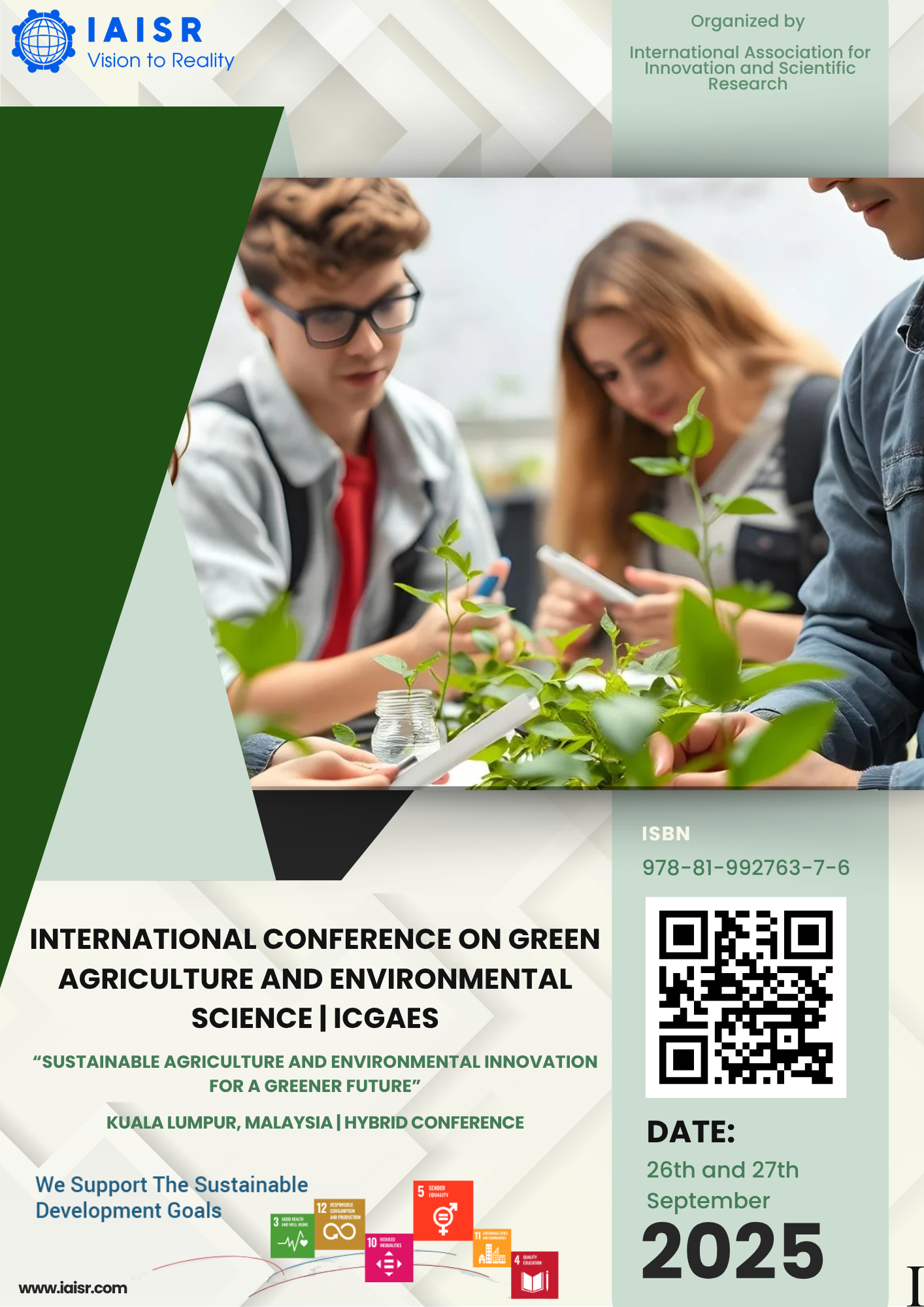
All accepted and presented papers at the International Conference on Green Agriculture and Environmental Science has been published in the official conference proceedings with an unique ISBN number

ISBN: 978-81-992763-7-6

The proceedings made available online/downloadable through the conference portal.

Awards we Provide

Where innovation meets recognition—prestigious awards await outstanding contributors

Registration Details

Register to be part of the conference and present your research to a global audience of professionals and scholars. Each accepted paper must have at least one registered author to be included in the conference proceedings and program schedule.

  • For group registrations or discounts, contact us via WhatsApp +91 89043 99315 or email at agrienvisummit@gmail.com.
  • Conference fee is inclusive of 18% GST and exclusive of bank transfer charges and Conference registration fee is non-refundable and non-transferable.
  • Registration fee includes access to conference session, conference materials and refreshments and Registration fee does not include accommodation charges.
  • IAISR members are eligible for the IPS member conference registration fee category and fee benefits.
  • Accompanist Rs. 2500/- per person will be charged.
  • Participation certificate of the conference will be given to both the online and offline participants and No abstracts will be published in the conference proceedings book without registration to the conference.
Register Now →
Select the Category
01
Fill the Form
02
Payment Process
03
Conference Registration Fees

Conference Registration Fees

Category IPS members Physical Fee Non-IPS members Physical Fee IPS members Virtual Fee Non-IPS members Virtual Fee
National Academicians / Researchers
National Students (UG/PG)*
National Listeners
International Academicians / Researchers
International Students (UG/PG)*
International Listeners
← Swipe sideways to view full table →
Selected Fee: --

Participant Registration Form

Bank Transfer Details

    Name of the Account : IAISR MEETINGS PRIVATE LIMITED
    Account Number : 10227288565
    IFSC Code : IDFB0080893
    SWIFT Code : IDFBINBBMUM
    Bank Name : IDFC FIRST
    Branch : NELLORE BRANCH
  • After completing the bank transfer, kindly share the Transaction ID / UPI Reference Number along with the payment screenshot or transaction receipt copy to our official conference email address environmentalagriconference@iaisr.com for registration confirmation. Please also mention the participant name and Paper ID (if applicable) in your email. Your registration will be confirmed only after payment verification, and a confirmation acknowledgment will be sent to you within 24–48 working hours.

Cancellation Policy

IAISR understands that unforeseen circumstances may require participants to cancel their registration. Below is our cancellation and refund policy:

Cancellation & Refund Guidelines:

  • Cancellation Requests: All cancellation requests must be submitted in writing via email to the conference secretariat.
  • Refund Eligibility:
    • Before 60 days of the event: 75% refund (minus processing fees)
    • Between 30–60 days of the event: 50% refund (minus processing fees).
    • Less than 30 days before the event: No refund will be provided
  • Transfer of Registration: If unable to attend, participants may transfer their registration to another individual with prior approval.
  • No-Show Policy: No refunds will be issued for participants who fail to attend the event without prior notice.
  • Event Cancellation: If IAISR cancels the event for any reason, a full refund will be issued to all registered participants.
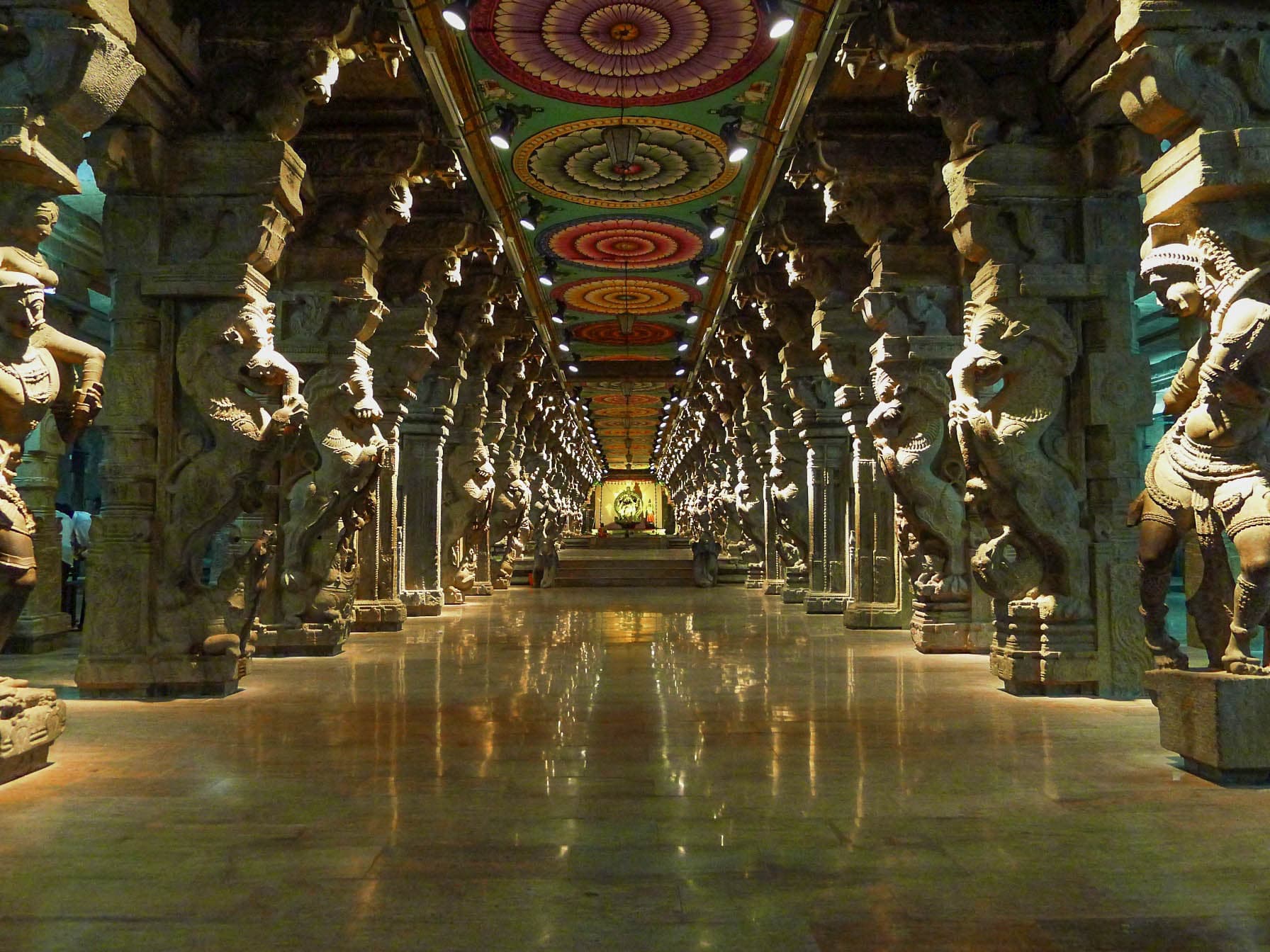
Meenakshi Amman Temple, Madurai
Meenakshi Temple Gopuram, Madurai
Aerial View of Madurai city

Madurai: The Temple City of Tamil Nadu

Madurai, one of the oldest continuously inhabited cities in India, is renowned as the “Athens of the East” for its rich cultural heritage, architectural grandeur, and historical significance. Situated on the banks of the River Vaigai in Tamil Nadu, Madurai beautifully blends tradition with modernity, making it an ideal host city for the International Conference on Environment, Agriculture, Horticulture & Life Sciences (ICEAHLS) ... . A prominent academic and research hub, Madurai houses several esteemed institutions such as the Tamil Nadu Agricultural University (TNAU) – Agricultural College & Research Institute (AC&RI) and Horticultural College & Research Institute (HC&RI), Periyakulam, making it a fitting venue for a global scientific dialogue on sustainable agriculture, environment, and life sciences.

Tourist Attractions in Madurai:
  • Meenakshi Amman Temple
  • Thirumalai Nayakkar Mahal
  • Gandhi Memorial Museum
  • Koodal Azhagar Temple
  • Pazhamudhir Solai
  • Samanar Hills (Samanar Malai)
  • Vaigai Dam & Periyakulam
  • Vandiyur Mariamman Teppakulam
  • Kodaikanal (Hill Station Excursion)
  • Athisayam Theme Park
  • Thiruparankundram Murugan Temple
  • Eco-Tourism and Rural Visits
Tourist Attractions in Madurai:
  • Meenakshi Amman Temple
  • Thirumalai Nayakkar Mahal
  • Gandhi Memorial Museum
  • Koodal Azhagar Temple
  • Pazhamudhir Solai
  • Samanar Hills (Samanar Malai)
  • Vaigai Dam & Periyakulam
  • Vandiyur Mariamman Teppakulam
  • Kodaikanal (Hill Station Excursion)
  • Athisayam Theme Park
  • Thiruparankundram Murugan Temple
  • Eco-Tourism and Rural Visits